


Cursor’s CEO explains why he believes rivals like OpenAI and Anthropic won’t overpower his company.
Cursor’s CEO and their competitive position against OpenAI and Anthropic.Michael Truell, CEO of Cursor’s parent company Anysphere, believes his
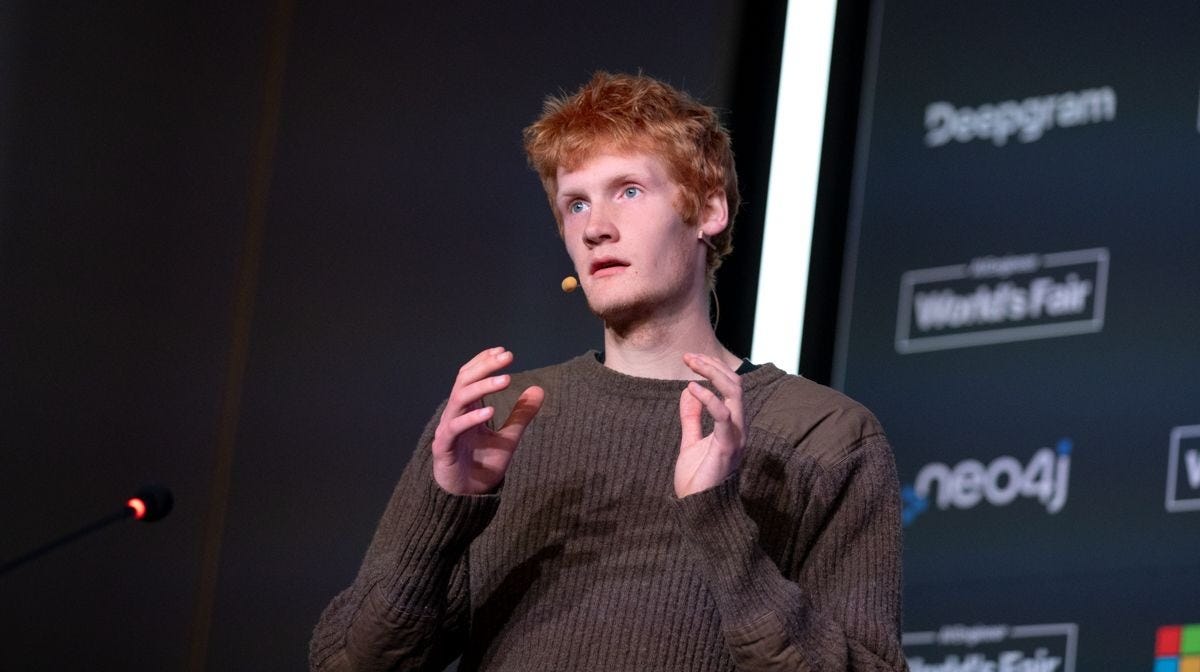
Cursor’s CEO and their competitive position against OpenAI and Anthropic.Michael Truell, CEO of Cursor’s parent company Anysphere, believes his AI coding startup can withstand competition from giants like OpenAI and Anthropic by focusing on product integration rather than competing on model development. Speaking at Fortune’s AI Brainstorm conference, Truell drew a striking analogy, describing competitors’ coding products as “a concept car” while positioning Cursor as “a production automobile”. Rather than racing to train frontier models, Cursor sources the best available intelligence from OpenAI, Anthropic, and others, supplementing with in-house models where product-specific optimization matters most. This strategy has proven successful, with the company reaching $1 billion in annualized revenue and securing a $29.3 billion valuation after raising $2.3 billion in funding.

Truell emphasized that Cursor is focused on handling complex agentic functions and serving teams as a whole rather than just individual coders. The company’s code review product analyzes every pull request, whether written by AI or humans, helping development teams manage their entire workflow. Cursor now counts over half the Fortune 500 as customers, including NVIDIA, Uber, and Adobe, demonstrating strong enterprise adoption. The company’s internal models reportedly generate more code than almost any other language models in the world, giving them specialized capabilities that general-purpose AI providers may struggle to match in the developer tools space.
Truell’s confidence stems from a bet that the application layer will capture more value than the model layer as foundation models potentially commoditize. If Cursor wins, it won’t be by out-modeling OpenAI or Anthropic—it will triumph because it out-products them for the job developers really want done: sending better code to customers faster, with fewer surprises. This represents a strategic wager on execution over scale and integration over invention. The company previously turned down an acquisition offer from OpenAI earlier this year, choosing instead to maintain independence and continue building specialized developer tools that integrate multiple AI models into a cohesive, production-ready system designed for real-world development workflows.